Even a minor car accident can be stressful, especially when paperwork and legal steps follow. Uncertainty about what to do next often exacerbates the situation, particularly when costs and deadlines are involved.
That’s why understanding the car insurance claim process matters. Knowing the right steps, required documents, and expected timelines before an accident happens can save time, money, and frustration. While the basics of filing a claim are similar worldwide, Switzerland has specific rules—from accident reports to liability requirements—that must be strictly adhered to.
This guide helps you navigate the process clearly and avoid common mistakes under Swiss insurance regulations.
What Is the Car Insurance Claim Process?
The car insurance claim process is the formal request you make to your insurance provider for financial coverage following an event, usually an accident, but potentially theft, vandalism, or natural damage (like hail).
Simply put, it’s the mechanism that activates your policy to cover defined losses. What a car insurance claim covers depends entirely on the policy you have purchased (e.g., liability, partial casco, or comprehensive). It can include:
Damage to your own vehicle.
Damage to another party’s vehicle or property (Third-Party Liability).
Medical expenses resulting from the incident.
It’s important to note the difference between reporting an accident and filing a claim: reporting is notifying the insurer of the incident; filing a claim is requesting payment for the resulting loss.
When Should You File a Car Insurance Claim?
When should you file a car insurance claim
The decision to file a claim often depends on the severity of the incident and the amount of your deductible (franchise).
You should file a claim for:
Major Accidents: Any incident resulting in serious damage, injury, or potential legal dispute.
Third-Party Damage or Injuries: If another vehicle or person is involved, filing a claim is legally necessary to cover the mandatory Third-Party Liability portion.
Contractual Obligations: Your policy legally requires you to report serious incidents within a specified timeframe (often 24 to 72 hours).
You may consider paying out of pocket when the damage is minor and the repair cost is close to, or equal to, your deductible. In such cases, filing a claim could trigger a higher premium at renewal, which may end up costing more over time than covering the repair yourself.
How to File a Car Insurance Claim?
How to file a car insurance claim
The claims process is structured, and adhering to these steps ensures a smooth and timely reimbursement.
Step 1: Ensure safety and call emergency services (if needed)
Your safety and the safety of others are the absolute priority. Turn on hazard lights, set up a warning triangle, and move vehicles to a safe location if possible.
Call Police (117) or Ambulance (144) immediately if there are injuries or if the accident causes significant traffic obstruction or property damage. Police involvement is often mandatory in Switzerland if a third-party injury is involved.
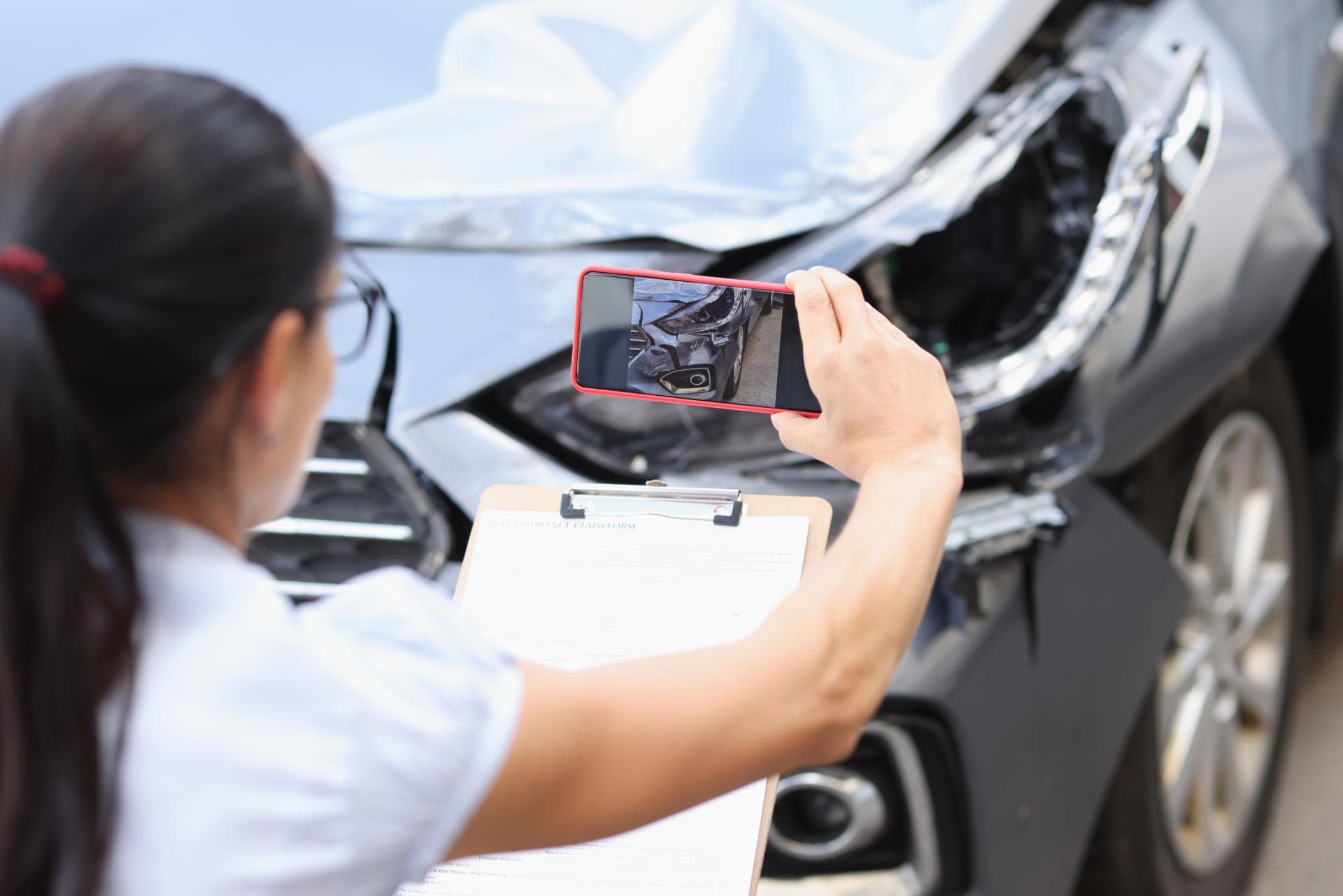
Step 2: Document the accident
Comprehensive documentation protects your interests and speeds up the claim assessment.
Photos and videos: Take clear, high-resolution pictures of all vehicles involved, damage, license plates, the road conditions, and the surrounding area.
Vehicle positions: Note the exact location and position of the vehicles at the time of the collision.
Witness details: Collect names, phone numbers, and addresses of any independent witnesses.
Step 3: Report the accident to your insurer
Report the incident as soon as possible, even if you are unsure if you will file a claim. Most Swiss insurers offer options for online, phone, or agent-assisted claims.
Be aware of reporting deadlines, which are strictly enforced. Failure to report promptly may result in reduced compensation.
Step 4: Submit insurance claim documents
You will submit all collected evidence and formal documents to your insurer, typically through an online portal or via email, allowing them to assess fault and coverage.
How the Car Insurance Claim Process Works in Switzerland
The car insurance claim process is heavily influenced by strict Swiss administrative and legal requirements.
Accident report procedure
In Switzerland, accidents are usually documented using the European Accident Report Form (Constat Européen d’Accident).
This standard two-part form, available in multiple languages, is used across Europe. Both drivers complete and sign a single form at the scene. Signing the form does not mean admitting fault; it simply records the facts of the accident.
Police involvement is required if there are injuries or fatalities, significant damage to public property, or if the drivers cannot agree on what happened, or one party cannot be identified. In cross-border accidents, all insurance details must be exchanged, including the Green Card, and local reporting rules should be followed in addition to notifying your Swiss insurer.
Required Insurance Claim Documents
To successfully process a claim, you must typically provide the following to your insurer:
Accident report (constat d’accident): The completed and signed European Accident Report Form.
Driver and vehicle details: Copies of driving licenses, vehicle registration certificates (permis de circulation), and insurance policy details for all parties involved.
Photos and evidence: All photographic or video evidence collected at the scene.
Repair invoices or estimates: Depending on the claim type, the insurer will require an official estimate from a certified garage or the final repair invoice.
Third-Party Liability (mandatory): This coverage is legally required in Switzerland and covers damages and injuries you cause to others. The insurer handles the claim and any resulting legal disputes involving the third party. This mandatory coverage underlines the severe legal consequences if you drive without insurance in Switzerland.
Partial Casco (Partial Comprehensive): Covers specific events outside of a collision, such as theft, fire, glass breakage, and damage from natural events (e.g., hail, floods).
Comprehensive Coverage (Full Casco): Includes Partial Casco coverage plus damage to your own vehicle resulting from an at-fault accident.
Fault-based vs no-fault situations
Fault-based: If the accident is deemed your fault, your liability insurance pays for the third party's damages, and your Comprehensive (Full Casco) policy covers your own vehicle (subject to your deductible). A claim will likely increase your premium due to losing your no-claims bonus.
No-fault: If the other party is at fault, their liability insurance covers all your damages, and your premium should not be affected.
Need help with a car insurance claim in Switzerland?
Assurance Genevoise helps you navigate the car insurance claim process with clarity, speed, and confidence.
FAQ
While the legal statute of limitations is 2 years, most insurance contracts require you to report the incident to your insurer immediately or within a very short period (e.g., 24 to 72 hours) after the event occurs or after you become aware of the damage. Always check your policy's fine print.
Conclusion
Navigating the car insurance claim process in Switzerland comes down to preparation and quick action. By staying safe, documenting the accident properly, and reporting it without delay, you can speed up your claim and avoid unnecessary issues.
Understanding Swiss-specific rules, such as using the European Accident Report Form and having mandatory third-party liability coverage, makes the process far more manageable. With the right knowledge and support, handling a claim doesn’t have to be stressful. Assurance Genevoise is here to guide you every step of the way.